
As a bonus to the scientific program, the organizers of TTP.10 offer early mornings (from 06:00 to 08:00 on Monday 29 August, Tuesday 30 August and Thursday 1 September) professional birdwatching tours in the surroundings of Puflene Resort. The interested persons can join for free these tours. They will be guided around by professional ornithologists. A table will be avialble at the reception for registration.
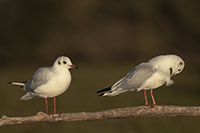 Located at the southwestern part of the Danube Delta, along the Sf Gheorghe branch running into the Black Sea, Murighiol lays in the middle of a birdwatcher’s paradise. To the north and east, there is a world made by freshwater lakes and reed beds, the south has shallow alkaline lakes, with sand levees, while to the west just at the town’s outskirts you step into the shortgrass Eurasian steppes.
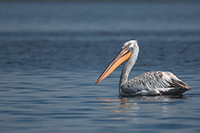 The Danube Delta itself has more than 100 breeding and 200 more regularly migrating bird species, with millions of birds passing through in migration. While famous for their breeding pelican population (both species easily observable close to or above the resort), it hosts important breeding populations of 10 more species of global conservation concern, including Sakers, Ferruginous Ducks or Red-footed Falcons!
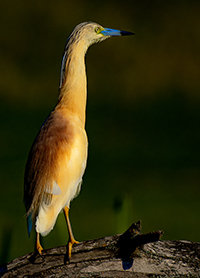 The neighborhood of the TTP.10 location is a prime area for short birdwatching trips for wildfowl, wading birds or common species, like Spanish Sparrows, Rollers and Hobbies. You should keep your binoculars handy, as breeding birds of the nearby colonies of Black and Whiskered Terns, Spoonbills, Night or Squacco Herons pass above Puflene Resort at any moment. Local breeding birds at the resort include White Storks, Lesser-grey Shrikes, Paddy-field Warblers, Sand Martins and three Sparrow species! In the night you will hear the booming of Great Bitterns, the coos of Scops Owls and the song of Savi’s Warbler. A short visit to the nearby steppe may reveal Isabelline Wheatear, Short-toed and Calandra Larks as well many, many Tawny Pipits. Rosy Starlings do not show each year, but they bread in huge colonies three times in the last decade in a nearby quarry, together with Black-throated and Pied Wheatears or Eagle Owls.